
Have you ever taken a photo of a stunning sunset, only to look at your iPhone screen and feel a little disappointed? The sky is blown out, or the shadows are pitch black, and the magic just isn’t there. You know your iPhone has an incredible camera—Apple talks about it every September—but you feel like you aren't squeezing all the juice out of it.
If you have an iPhone "Pro" model (12 Pro or later), you are carrying around two secret weapons in your pocket that professional photographers and filmmakers pay thousands of dollars to access: ProRAW and ProRes. These aren't just fancy marketing buzzwords; they are powerful file formats that completely change how your images and videos are saved, giving you unprecedented control over the final look.
While these features are turned off by default to save space, learning when and how to use them can elevate your content from "nice snapshot" to "gallery ready." Let’s break down exactly what these formats are and how you can start shooting like a pro today.
Understanding ProRAW: The Ultimate Digital Negative
To understand ProRAW, we first need to understand how a standard iPhone photo (HEIC or JPEG) works. When you snap a regular picture, your iPhone acts like a chef at a restaurant. It takes the ingredients (the light hitting the sensor), cooks them, seasons them, and serves you a finished dish. It decides how bright the image should be, how vibrant the colors are, and how much sharpening to apply. Once that dish is served, you can’t really un-cook it. You can add a little salt (editing), but you can’t change the main ingredients.
ProRAW is different. Instead of a finished dish, ProRAW gives you the bag of groceries. It saves all the raw data from the camera sensor without throwing anything away. This means the file is much larger, but it retains details in the brightest highlights and the darkest shadows that a standard JPEG would delete to save space.
Pro Tip: Apple ProRAW is special because it combines the flexibility of a traditional RAW file with Apple’s computational photography magic (like Deep Fusion and Smart HDR). You get the best of both worlds: the raw data and the smart processing that makes iPhone photos look sharp and noise-free.
When you edit a ProRAW file, you can recover details that look invisible. That white, blown-out sky? You can dial down the highlights and reveal the clouds. That dark shadow under a tree? You can brighten it up and see the texture of the bark. It gives you the freedom to make artistic decisions after the fact, rather than relying on the camera's computer to decide for you.
How to Enable and Shoot in ProRAW
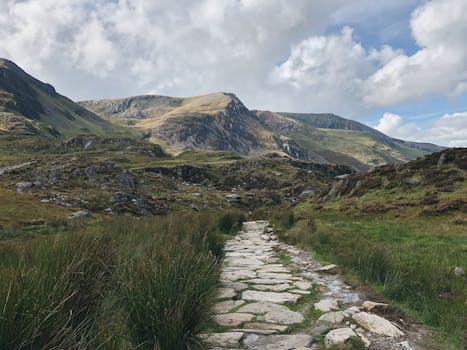
Because ProRAW files are massive (often 10 to 12 times larger than a standard photo), Apple leaves this feature off by default. You don't want to use it for a quick picture of your grocery list or a parking spot number. You want to save it for the shots that matter.
Here is how to set it up and use it:
- Open your Settings app and scroll down to Camera.
- Tap on Formats.
- Under "Photo Capture," toggle on ProRAW & Resolution Control.
- (Optional for iPhone 14 Pro and newer): Tap into "Pro Default" and select HEIF Max (for high detail but smaller size) or ProRAW Max (for the ultimate quality).
Once you have enabled this in settings, you will see a new "RAW" or "RAW MAX" button in the top corner of your Camera app. It will have a line through it when it is off. Simply tap it to turn it on when you are facing a challenging lighting situation or a beautiful landscape.
The best times to use ProRAW are during "golden hour" (sunrise/sunset), in high-contrast scenes (bright windows in a dark room), or anytime you plan on editing the photo later in apps like Lightroom or the native Photos app.
ProRes: Hollywood Quality Video in Your Pocket
If ProRAW is for photographers, ProRes is for the aspiring filmmakers. ProRes is a video codec—a method of compressing video data—that is an industry standard in television and cinema. It is used by professional editors because it preserves incredible color fidelity and is much easier for editing software to process without lagging.
Standard iPhone video is highly compressed to keep file sizes small so you can easily text them to friends. However, this compression can lead to "artifacts" or blocky pixels, especially in fast-moving scenes or low light. ProRes minimizes this compression. It captures more color data, which is essential if you want to color grade your footage (change the mood, temperature, or style) without the image falling apart or looking grainy.
However, there is a catch, and it is a big one: Storage Space.
Warning: ProRes files are gigantic. One minute of 4K ProRes video can consume nearly 6 GB of storage. A 512GB iPhone could fill up in less than an hour and a half of filming.
Because of this, ProRes is not for filming your dog chasing a ball (unless it's for a documentary about your dog). It is designed for short films, high-quality YouTube content, real estate walkthroughs, or creative projects where image quality is the highest priority.
Managing the Storage Beast
The biggest barrier to shooting like a pro is managing the file sizes. If you shoot everything in ProRAW and ProRes, your iPhone will run out of space within a week. Here is how to manage your workflow effectively so you don't get the dreaded "Storage Full" notification.
- Toggle it off: Get in the habit of checking the RAW toggle in your camera app. Ensure it is off for casual snapshots and only turn it on for "portfolio" shots.
- Use External Storage (iPhone 15/16 Pro): If you have an iPhone 15 Pro or newer with USB-C, you can connect a portable SSD directly to your phone. You can even record ProRes video directly to the external drive, bypassing your phone's internal storage entirely. This is a game-changer for videographers.
- iCloud Photos: Ensure you have enough iCloud storage (usually the 2TB plan is recommended for creators) and that "Optimize iPhone Storage" is turned on. This uploads the massive originals to the cloud and keeps smaller versions on your phone.
- AirDrop to Mac: If you edit on a computer, AirDrop is the fastest way to move these files. However, for large ProRes videos, a wired cable connection is often more stable and faster.
Editing: Where the Magic Happens
It is important to note that when you first look at a ProRAW photo or a ProRes video, it might actually look worse than a standard capture. It might look "flat," lacking contrast, or slightly desaturated. Do not panic! This is intentional.
Because the camera hasn't applied high contrast or heavy saturation automatically, the file looks flat to give you the room to make those changes. You have to "develop" the digital negative.
For ProRAW photos, the built-in Apple Photos app is surprisingly powerful. Open the photo, tap Edit, and start playing with the sliders. You will notice that the "Highlights" and "Shadows" sliders are much more effective than usual. For even more control, apps like Adobe Lightroom Mobile or Darkroom are fantastic choices that can read the ProRAW data perfectly.
For ProRes video, you will likely want to edit on a computer using Final Cut Pro or Adobe Premiere. However, if you want to edit on the go, LumaFusion and the mobile version of DaVinci Resolve for iPad/iPhone are incredibly capable tools that can handle these heavy files with ease.
Shooting in ProRAW and ProRes is about taking ownership of your creativity. It requires a bit more work and a lot more storage, but the result is a library of images and videos that are truly yours—rich in detail, deep in color, and ready for the big screen.