
Let’s be honest: you probably have thousands of photos on your iPhone right now. Between pictures of your pets, your lunch, and accidental screenshots of your lock screen, your camera roll is a digital history of your life. But have you ever looked at a photo taken by a professional photographer—shot on the exact same iPhone model you have—and wondered, "Why don't my pictures look like that?"
The truth is, the iPhone camera system is an incredibly powerful tool that rivals expensive DSLRs, but Apple hides some of its best features behind swipes, taps, and settings menus. You don’t need a degree in photography to take stunning shots; you just need to know where to look.
Whether you are rocking the latest iPhone Pro Max or holding onto a beloved older model, these hidden tricks will instantly elevate your photography game from "snap and hope" to "shoot like a pro." Let’s dive into the settings and techniques that will change the way you see the world through your lens.
1. Master the Light with AE/AF Lock
One of the most common frustrations with smartphone photography is the camera’s tendency to constantly refocus or change brightness levels just as you are about to snap the picture. If a person walks by in the background or a cloud shifts, your iPhone tries to "help" by adjusting the exposure, often ruining the mood of your shot.
To take full control, you need to use the AE/AF Lock (Auto Exposure/Auto Focus Lock). This tells your iPhone, "Focus here, keep the lighting exactly like this, and don't change a thing until I say so." This is particularly useful for sunsets, backlit subjects, or macro shots where the camera struggles to find a focal point.
How to use it:
- Open your Camera app and frame your shot.
- Tap on the most important part of the image (usually your subject's face or a specific detail) and hold your finger down for a couple of seconds.
- You will see a yellow banner appear at the top of the screen that says AE/AF LOCK.
- Once locked, you can move the camera around to recompose the shot without losing focus.
- The Pro Move: Once locked, place your finger on the sun icon next to the yellow box and slide it down. This lowers the exposure, making colors richer and shadows more dramatic.
Pro Tip: Don’t be afraid of the dark! iPhone cameras try to brighten everything up, which can make photos look washed out. Locking your focus and dragging the exposure slider down slightly (underexposing) almost always results in a more cinematic, professional-looking image.
2. The Secret to Perfect Composition: Grid and Level
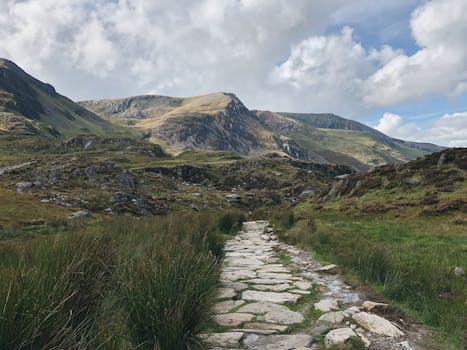
Have you ever taken a picture of the ocean horizon, only to realize later that the water looks like it's sliding off the right side of the photo? Or perhaps you tried to take a trendy overhead shot of your coffee and notebook, but the angle feels slightly "off"?
Composition is the skeleton of a good photograph. The most famous rule in photography is the Rule of Thirds—the idea that images are most pleasing when the subject is placed off-center, at the intersection of grid lines. Apple includes a hidden grid feature that helps you align your shots perfectly, and in recent iOS updates, they added a haptic "Level" tool that is a total game-changer for straight lines.
How to enable these tools:
- Go to your iPhone Settings app.
- Scroll down and select Camera.
- Under the "Composition" section, toggle on Grid.
- In the same section, toggle on Level (available in iOS 17 and later).
Now, when you open your camera, you will see faint lines dividing your screen into nine squares. Try to place your subject where the lines cross rather than dead center. If you are holding the phone straight, a broken white line will appear in the center of the screen; when it turns yellow and connects, your horizon is perfectly level.
Hidden Feature: If you are taking a "flat lay" photo (shooting straight down at a table), two small crosshairs will appear in the center of the screen—one white and one yellow. When you tilt your phone until the two crosses merge into one, you are perfectly parallel to the table. No more wonky food photos!
3. Turn Live Photos into Long Exposure Masterpieces
This is arguably the most impressive "party trick" in the iPhone arsenal. You know those dreamy, professional photos of waterfalls where the water looks like silky smooth milk? Or photos of city streets at night where car headlights turn into long, glowing streaks of light? Traditionally, you needed a tripod and complex shutter speed knowledge to achieve that.
On an iPhone, you can do this instantly using a feature you likely already have turned on: Live Photos. A Live Photo captures 1.5 seconds of video before and after you press the shutter. The iPhone can analyze that movement and blur it together to create a long exposure effect.
How to create the magic:
- Ensure Live Photo is turned on (the concentric circles icon in the top right of the Camera app should be yellow, not crossed out).
- Take a photo of something with continuous motion (a flowing river, a waterfall, moving traffic, or a crowded sidewalk).
- Hold your hand as steady as possible while shooting.
- Open the photo in your Photos app.
- Tap the "Live" button in the top left corner of the photo.
- From the dropdown menu, select Long Exposure.
Watch as the software instantly crops the image slightly and blurs the moving elements while keeping the static elements sharp. It turns a chaotic snapshot into a piece of art.
4. Edit Depth of Field After You Shoot
Portrait Mode was a revolution when it launched, using software to blur the background (bokeh) and make the subject pop. However, many users don't realize that the photo isn't "baked in" the moment you snap it. Because the iPhone captures depth data, you can actually change the focus and the intensity of the blur after you’ve taken the picture.
This is incredibly helpful if the original shot looks too artificial, or if the blur accidentally wiped out a part of your subject's hair or glasses. You essentially have the ability to change the camera lens aperture retrospectively.
How to tweak your portraits:
- Open a photo taken in Portrait Mode.
- Tap Edit in the top right corner.
- Look for the f-stop number (usually an f followed by a number like f/4.5) at the top left or bottom of the screen.
- Tap it, and a slider will appear.
- Slide left (lower number) for more blur and a dreamier look.
- Slide right (higher number) for less blur, bringing more of the background into focus.
You can also tap on different parts of the photo to change where the focus is. If the camera accidentally focused on the nose instead of the eyes, just tap the eyes to reset the focal point.
Pro Tip: Portrait Mode isn't just for humans! It works wonders on pets, flowers, and even product photography. Just make sure you have good lighting; Portrait Mode struggles in dim environments because it uses a different lens combination that requires more light.
5. Capture Action with Burst Mode (The Right Way)
Have you ever tried to take a picture of a jumping dog, a child scoring a goal, or a splash in a pool, only to miss the moment by a split second? Human reaction times are slow, but your iPhone is fast.
Many users think holding down the shutter button takes a burst of photos. On newer iPhones (iPhone XS and later), holding the shutter button actually starts recording a video (QuickTake). To take a rapid-fire burst of high-resolution photos, the gesture is slightly different.
How to freeze time:
- Frame your subject.
- Touch the shutter button and immediately slide it to the left. (If holding the phone in landscape with the button on the right, slide it up).
- You will see a counter increasing rapidly in the shutter circle—this indicates how many photos you are taking.
- Release the button to stop.
- Go to your Photos app, open the image stack, tap Select, and scroll through to choose the one perfect frame where the action is frozen in time.
This technique allows you to capture the exact millisecond of peak action, ensuring crisp, clear photos of moving subjects that would otherwise be a blurry mess.
The best camera is the one you have with you, and your iPhone is a creative powerhouse waiting to be unleashed. By utilizing exposure locks, composition grids, long exposure tricks, and depth editing, you move from simply documenting your life to creating art from it. So, wipe off that lens (seriously, give it a wipe!), get out there, and start shooting like a pro.