
You’ve probably noticed it while framing a shot on your new iPhone: a small, crossed-out icon labeled "RAW" or "ProRes" tucked away in the corner of your screen. If you are like most people, you might have tapped it, noticed nothing immediately different, and shrugged it off. Or perhaps you’ve heard tech reviewers raving about these features and wondered if they actually matter for the photos of your dog or your vacation sunsets.
For years, "shooting in RAW" was a handshake secret among professional photographers lugging around heavy DSLR cameras. It was complex, cumbersome, and required hours of editing. But Apple changed the game by bringing these professional workflows to the device in your pocket. The question is: do you need them? And more importantly, how do you use them without filling up your storage in five minutes?
Let’s demystify Apple ProRAW and ProRes, strip away the jargon, and look at how these tools can genuinely elevate your iPhone photography from "great" to "gallery-worthy."
Unlocking the "Digital Negative": What is ProRAW?
To understand ProRAW, we first have to talk about how your iPhone usually takes pictures. When you snap a standard photo (saved as a HEIC or JPEG file), your iPhone acts like a very aggressive editor. It captures the light, but then immediately makes decisions for you. It boosts the contrast, sharpens the edges, balances the colors, and discards the data it thinks you don't need to keep the file size small.
Think of a standard photo like a meal at a restaurant. It arrives fully cooked and seasoned. It’s delicious, but you can’t un-salt the soup or change the steak from well-done to medium-rare. The decisions have been made.
ProRAW is like getting a box of premium ingredients delivered to your kitchen. Apple still helps you (using its computational photography to reduce noise and combine exposures), but it leaves the final "cooking" up to you. It saves a massive amount of light and color data that a standard photo throws away.
Why does this matter? If you take a photo of a sunset and the foreground is too dark, a standard photo might just see black blobs. With ProRAW, you can brighten those shadows in editing and discover that the camera actually captured the details of the trees, the grass, and your friend's face.
When to Shoot ProRAW (and When to Skip It)
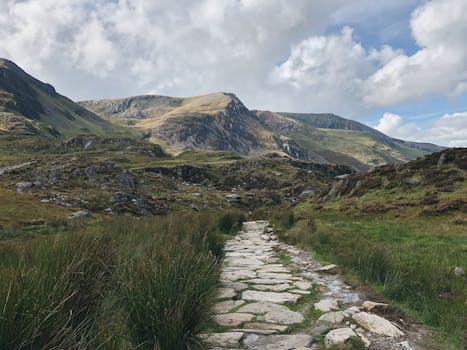
Because ProRAW files preserve so much data, they are huge—often 10 to 12 times larger than a standard photo. If you shoot everything in ProRAW, your iCloud storage will scream for mercy within a month. The secret to mastering iPhone photography is knowing when to toggle that feature on.
Here are the best scenarios for switching to ProRAW:
- High Contrast Scenes: Situations with very bright lights and very dark shadows (like a bright window in a dark room or a sunset). ProRAW allows you to balance these extremes later.
- Low Light and Night Mode: When lighting is tricky, the extra data allows you to adjust the white balance (the "warmth" of the photo) perfectly without ruining the image quality.
- Portraits You Plan to Print: If you are taking a photo you intend to frame or print on a canvas, you want every ounce of detail possible.
- Creative Editing: If you love using apps like Lightroom or VSCO to heavily stylize your photos, ProRAW gives you a flexible canvas that won't degrade as you edit.
Conversely, you should keep ProRAW off for your grocery lists, quick screenshots, parking spot reminders, or casual snaps where lighting is already perfect. For 90% of daily life, the iPhone’s standard processing is magic enough.
How to Enable and Shoot ProRAW
Ready to try it? The feature isn't on by default. You need to tell your iPhone you want the option available.
Follow these steps to set it up:
- Open Settings on your iPhone.
- Scroll down and tap on Camera.
- Tap on Formats.
- Under "Photo Capture," toggle on ProRAW & Resolution Control.
- (Optional for iPhone 14 Pro/15 Pro/16 Pro users): Tap "Pro Default" and ensure it is set to "ProRAW Max" if you want the full 48-megapixel resolution, or "ProRAW 12MP" if you want the editing flexibility with smaller file sizes.
Once enabled, open your Camera app. You will see a "RAW" or "RAW MAX" icon in the top right corner. If it has a line through it, it's off. Tap it to turn it on (no line), and snap away.
Hollywood in Your Pocket: Demystifying ProRes
If ProRAW is for photos, ProRes is for video. However, while ProRAW is great for enthusiasts, ProRes is distinctly aimed at filmmakers and creators who edit on computers.
ProRes is a video codec (a way of compressing video) widely used in the film and TV industry. Standard iPhone video is highly compressed to save space. ProRes video has very low compression, meaning it captures better color fidelity and is much easier for computer software to edit without lagging.
However, there is a catch, and it is a big one: File Size.
Warning: One minute of 4K ProRes video can consume about 6 GB of storage. That is roughly the same space as 3,000 standard photos.
Unless you are shooting a short film, a high-end YouTube video, or a clip you intend to color grade heavily on a computer, you likely do not need ProRes. For capturing your child’s soccer game or a funny moment with your cat, the standard video mode (High Efficiency) is actually better because it includes more stabilization and takes up a fraction of the space.
The Darkroom Experience: Editing Your Masterpieces
Here is the most important rule of ProRAW: A ProRAW photo often looks worse than a standard photo straight out of the camera.
This confuses many first-time users. They snap a ProRAW pic, look at it in the Photos app, and think, "This looks flat and dull." That is intentional! Remember the cooking analogy? The ingredients are raw. You have to cook them.
To get the most out of your shot, you must edit it. You don't need fancy software; the built-in Apple Photos app is incredibly powerful.
- Open your ProRAW photo and tap Edit.
- Start with Auto to see what the iPhone suggests, but don't stop there.
- Adjust Highlights (pull them down to see details in clouds).
- Adjust Shadows (push them up to see details in dark areas).
- Play with Warmth and Tint. Because it is a RAW file, changing the color doesn't add weird artifacts or pixelation.
The moment you start moving those sliders, you will realize the power you have. You can rescue photos that seemed too dark, or calm down photos that seemed too bright. That flexibility is the true "Pro" feature.
Final Thoughts
Apple’s "Pro" features aren't just marketing buzzwords; they are genuine tools that bridge the gap between computational photography and professional creativity. While you might not need them for every brunch photo or quick selfie, knowing they are there—and knowing how to use them—gives you a superpower.
Next time you find yourself standing before a breathtaking landscape or a moody, dimly lit street scene, toggle that RAW button on. You might just capture an image with depth and detail you never thought a phone could produce.