
You’ve probably seen it sitting there in the corner of your Camera app: a little crossed-out icon labeled "RAW." Or perhaps you’ve dug through your settings and stumbled across "ProRes," wondering if it’s something you need to switch on. If you own a Pro model iPhone (iPhone 12 Pro or later), you are carrying a powerhouse of cinema and photography technology in your pocket. However, Apple leaves these features off by default for a reason—they aren't for every snapshot or video clip.
For the everyday user, the terms ProRAW and ProRes can sound intimidatingly technical. They sound like things only professional photographers or Hollywood directors need to worry about. But the truth is, understanding these two formats can be the difference between a "good" photo and a "stunning" masterpiece that looks like it came from a dedicated DSLR camera. Let’s demystify these features, explain why they matter, and show you exactly how to use them to elevate your content game.
What is Apple ProRAW? (The "Unbaked" Cake Analogy)
To understand ProRAW, we first need to understand how your iPhone normally takes a picture. When you snap a standard photo (saved as a HEIC or JPEG file), your iPhone makes thousands of split-second decisions for you. It adjusts the white balance, sharpens the edges, reduces noise, and compresses the file to save space. It is essentially baking a cake for you: it chooses the flour, sugar, and temperature, and presents you with a finished product. It usually tastes great, but you can't take the sugar out once it's baked.
ProRAW is different. It gives you the ingredients, not the cake. It combines the heavy lifting of Apple’s computational photography (like Deep Fusion and Smart HDR) with the uncompressed data of a traditional RAW format. This means the camera captures a massive amount of information about light, color, and detail that isn't immediately visible.
Why does this matter to you? Flexibility. If you take a standard photo of a sunset and the foreground is too dark, brightening it might make the image look grainy or muddy. With a ProRAW file, that shadow data is actually preserved. You can brighten the shadows in the edit, and the detail will still be there. You can completely change the "temperature" of the photo from cool blue to warm yellow without destroying the image quality.
Pro Tip: Think of ProRAW as your "safety net." If you are shooting in difficult lighting conditions—like a candlelit dinner or a bright beach at noon—ProRAW gives you the power to fix exposure mistakes later.
When to Use ProRAW (and When to Skip It)
Just because you can shoot in ProRAW doesn't mean you always should. These files are massive—often 10 to 12 times larger than a standard photo. If you shoot everything in ProRAW, your iCloud storage will fill up in the blink of an eye. Here is a guide on when to toggle that little button:
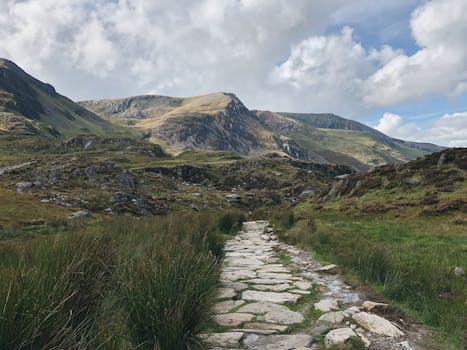
- High Contrast Scenes: Landscapes with bright skies and dark shadows are perfect for ProRAW. It allows you to recover the blue in the sky and the green in the trees simultaneously.
- Night Mode Shots: Low-light photography often requires aggressive noise reduction. ProRAW lets you control how much "smoothing" happens, keeping your night shots looking natural rather than plastic.
- Portraits You Plan to Edit: If you are taking a special photo of a loved one that you plan to frame or post on Instagram with a specific filter, shoot RAW. It gives you the best canvas to work on.
- Skip it for: Quick snapshots of receipts, grocery lists, random memes, or casual selfies. The standard HEIC format is more than enough for these and saves precious space.
Understanding ProRes: Hollywood in Your Pocket
If ProRAW is for photographers, ProRes is for the videographers. ProRes is a video codec (a way of compressing video) that is widely used in the professional film and television industry. It offers higher color fidelity and less compression than the standard video you shoot on your iPhone.
When you shoot standard video, the iPhone compresses the footage heavily to keep file sizes manageable. This compression can sometimes result in "artifacts" or blotchy colors, especially in fast-moving scenes or complex lighting. ProRes minimizes this compression. It ensures that the colors you see are accurate and that the details remain sharp, even when the camera is moving.
However, the warning about file size applies here even more strictly. A single minute of 10-bit HDR ProRes video can consume nearly 6 GB of storage. That is huge. Unless you are planning to edit your video on a computer using professional software like Final Cut Pro or Adobe Premiere, ProRes might be overkill for a TikTok video or an Instagram Story.
How to Enable and Use These Features
Ready to try them out? These features are disabled by default, so you need to dive into your settings to wake them up. Note that you must have a Pro model (iPhone 12 Pro or later for ProRAW; iPhone 13 Pro or later for ProRes) to see these options.
Step 1: Enable in Settings
- Open the Settings app on your iPhone.
- Scroll down and tap on Camera.
- Tap on Formats.
- Under "Photo Capture," toggle the switch for Apple ProRAW (or "ProRAW & Resolution Control" on newer models).
- Under "Video Capture," toggle the switch for Apple ProRes.
Step 2: Shooting in the Camera App
- Open your Camera app.
- For photos, look for the word RAW (usually crossed out) in the top right or top left corner. Tap it to uncross it. When it isn't crossed out, you are shooting in ProRAW.
- For video, switch to Video mode and look for the ProRes button. Tap it to enable it. You will see a "Max Time" indicator at the top of the screen, telling you exactly how many minutes of footage you can record before your storage is full.
Editing Your Masterpieces
The most important thing to remember is that ProRAW and ProRes files often look "flat" or dull straight out of the camera. This is intentional! The camera hasn't added the usual contrast and saturation boost, leaving that creative choice to you.
You don't need fancy computer software to edit ProRAW photos. The native Apple Photos app is incredibly powerful. Open your ProRAW photo, tap "Edit," and start playing with the sliders. You will notice that the "Highlights" and "Shadows" sliders are much more responsive than usual. You can pull back a bright white sky to reveal clouds that seemed invisible, or brighten a dark face without it turning into pixelated mush.
For those who want to go a step further, apps like Adobe Lightroom Mobile or Darkroom are fantastic for handling ProRAW files, offering advanced color grading tools that really take advantage of that extra data.
Workflow Note: Because these files are so large, sharing them can be tricky. If you AirDrop a ProRAW file to a friend, it takes longer. If you try to email it, it will likely be too big. It is usually best to edit the photo first, then export it as a standard JPEG/HEIC to share on social media.
Final Thoughts
Apple’s ProRAW and ProRes features bridge the gap between consumer convenience and professional quality. While they demand more storage space and a little bit of extra work in the editing phase, the results are undeniably superior. They allow you to capture memories with a level of depth and clarity that was previously impossible on a smartphone.
So, the next time you are standing before a breathtaking landscape or setting up a beautifully lit portrait, tap that "RAW" button. Give yourself the ingredients, not just the cake, and see just how creative you can get.