
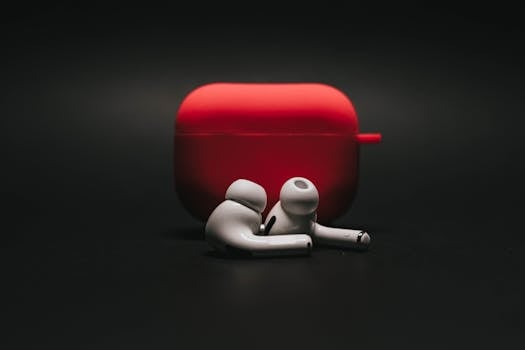
Let’s be honest: taking a new pair of AirPods out of the case for the first time is a magical experience. You pop them in, the connection chime plays instantly, and your favorite song starts streaming. Out of the box, AirPods (especially the Pro and Max models) sound fantastic. They are tuned to appeal to the widest range of listeners, offering a balanced mix of clear vocals and punchy bass.
But here is the secret that most everyday Apple users don’t know: "Balanced for everyone" doesn’t necessarily mean "Perfect for you."
Buried deep within your iPhone’s menus are powerful customization tools that can completely transform how your music, movies, and podcasts sound. These aren't just minor volume tweaks; we are talking about settings that can widen the soundstage, clarify muddy vocals, and boost bass response based on the actual shape of your ears. If you feel like your AirPods are just "good" but not "mind-blowing," you probably haven't toggled these switches yet.
Here are five hidden settings that will instantly upgrade your listening experience.
1. Unlock "Headphone Accommodations" (The Secret Weapon)
If you only change one setting from this entire list, make it this one. Most people assume that "Accessibility" settings are only for those with hearing impairments, but that is a huge misconception. The Headphone Accommodations feature is essentially a professional-grade equalizer and audio processor built right into iOS.
This feature allows you to tune the audio output to boost specific frequencies. For example, if you feel like movie dialogue is always mumbled, or if guitar solos feel buried behind the bass, this setting acts like a pair of prescription glasses for your ears.
How to enable it:
- Open your iPhone Settings.
- Scroll down and tap Accessibility.
- Scroll down to the "Hearing" section and tap Audio/Visual.
- Tap on Headphone Accommodations and toggle the switch to ON.
Once enabled, you will see a menu labeled "Tune Audio For." You can select Balanced Tone, Vocal Range, or Brightness. Most audiophiles prefer "Balanced Tone" for music, but "Vocal Range" is incredible for podcasts. You can also drag the slider from Slight to Moderate or Strong to adjust the intensity.
Pro Tip: There is a "Custom Audio Setup" wizard right on this screen. Tap it, and your iPhone will play a series of A/B comparisons (like an eye doctor asking "Better one, or better two?"). This creates a custom audio profile tailored specifically to your hearing.
2. Dial in Personalized Spatial Audio
Spatial Audio is Apple’s version of 3D surround sound. It uses the gyroscope and accelerometer in your AirPods to track your head movements, anchoring the sound to your device. When you turn your head, the vocals stay with the phone, making it feel like you are sitting in a cinema or a concert hall.
However, everyone’s head and ears are shaped differently. The way sound bounces off the curves of your outer ear contributes to how your brain perceives distance and direction. If you haven't set up Personalized Spatial Audio, you are getting a generic experience that might sound slightly "off" or less immersive.
How to set it up:
- Put your AirPods in your ears and open Settings.
- Tap on your AirPods name (which appears near the top of the menu).
- Scroll down to Personalized Spatial Audio.
- Tap Personalize Spatial Audio... and follow the on-screen prompts.
You will use your iPhone’s FaceID camera to scan the geometry of your ears. It looks a bit funny while you are doing it (you have to turn your head slowly in a circle), but the result is a much more accurate soundstage where instruments feel like they are floating around you in a specific space.
3. Optimize Your Streaming Quality
Sometimes the problem isn't the headphones; it's the source material. By default, Apple Music is set to save your mobile data. This means that when you are on the bus or walking the dog, the app is compressing your music files to make them smaller. Compression removes the finest details of a track—the shimmer of a cymbal or the breath of a singer—making the audio sound "flat."
While Bluetooth technology cannot currently transmit full "Hi-Res Lossless" audio perfectly, you can still send a much higher quality signal to your AirPods than the default setting allows. This ensures your AirPods are working with the best possible ingredients.
How to improve source quality:
- Go to Settings > Music.
- Tap on Audio Quality.
- Ensure Lossless Audio is toggled ON.
- Under Cellular Streaming, change the setting to High Quality or Lossless (be aware this uses more data!).
Important Note: If you use Spotify, go to Settings > Audio Quality and ensure "Cellular streaming" is set to "Very High." The default is often "Automatic," which drops quality aggressively if your signal dips.
4. The Ear Tip Fit Test (Physics Matters)
For AirPods Pro users, sound quality is largely dictated by physics. To get deep, rumbling bass and effective Noise Cancellation, you need a perfect airtight seal. If air is leaking out of your ear canal, the low-end frequencies escape with it, leaving your music sounding tinny and weak.
You might think the medium tips fit fine, but Apple actually built a software test to verify this. It plays a short clip of music and uses the internal microphone to measure sound levels inside your ear canal to detect leaks.
How to run the test:
- With your AirPods Pro in your ears, go to Settings.
- Tap your AirPods name at the top.
- Scroll down and select Ear Tip Fit Test.
- Press the blue Play button.
If you get green checkmarks, you are golden. If you get a yellow "Adjust or Try a Different Ear Tip" warning, change the silicone tips. Don’t be afraid to use two different sizes! It is very common to need a Medium tip for the left ear and a Large tip for the right ear. Getting this seal right is the single biggest hardware fix for better bass.
5. The "Late Night" EQ Hack
The iPhone has a built-in Equalizer (EQ) for the Music app, offering presets like "Rock," "Pop," and "Jazz." While these are great for flavoring your sound, there is one specific preset that many users swear by for a volume and clarity boost: Late Night.
Originally designed to normalize volume so that loud explosions in movies don't wake the neighbors while quiet dialogue remains audible, the "Late Night" setting compresses the dynamic range. In the context of music on AirPods, this brings up the quieter parts of a song and slightly tones down the loudest peaks.
The result? The music sounds louder, punchier, and more detailed at lower volumes. It makes every instrument feel more "present."
How to try it:
- Go to Settings > Music.
- Tap on EQ.
- Scroll down and select Late Night.
If "Late Night" feels too processed for you, try the R&B or Electronic presets. These tend to have a "V-shaped" curve, boosting the bass and the treble while scooping the mids, which creates a very energetic and fun sound profile that suits modern AirPods perfectly.
Your AirPods are capable of incredible performance; they just need a little guidance to get there. By spending five minutes tweaking these settings, you aren't just changing volume levels—you are unlocking the full potential of the hardware you paid for. Happy listening!